Need Help? Contact us ...




JOIN US IN THE FIGHT
AGAINST
HUMAN TRAFFICKING
Promoting Education and Empowering Survivors
UK-based, survivor-centred training on modern slavery, trafficking and exploitation.

JOIN US IN
THE FIGHT
AGAINST
HUMAN
TRAFFICKING
Promoting Education and Empowering Survivors through...
REFUGE & REINTEGRATION
Who We Are
Safe Pathways CIC (Rahabs Daughters CIC) is a UK-based, survivor-centred Community Interest Company focused on addressing human trafficking, modern slavery and exploitation. Working across statutory, voluntary and community sectors, the organisation provides training, consultancy and partnership support to help professionals, organisations and local systems recognise risk, respond safely and uphold their safeguarding and modern slavery duties.
Survivor-centred and trauma-informed
Evidence-based and aligned with UK guidance
Collaborative and community-partnered
Ethical, accountable and transparent in practice

What We Do
Education
Education programmes provide clear, practical training on human trafficking, modern slavery and exploitation for UK workplaces, frontline services and community settings. Content is aligned with UK safeguarding frameworks, statutory modern slavery guidance and professional standards, helping staff understand their roles, responsibilities and safe escalation routes.
Prevention
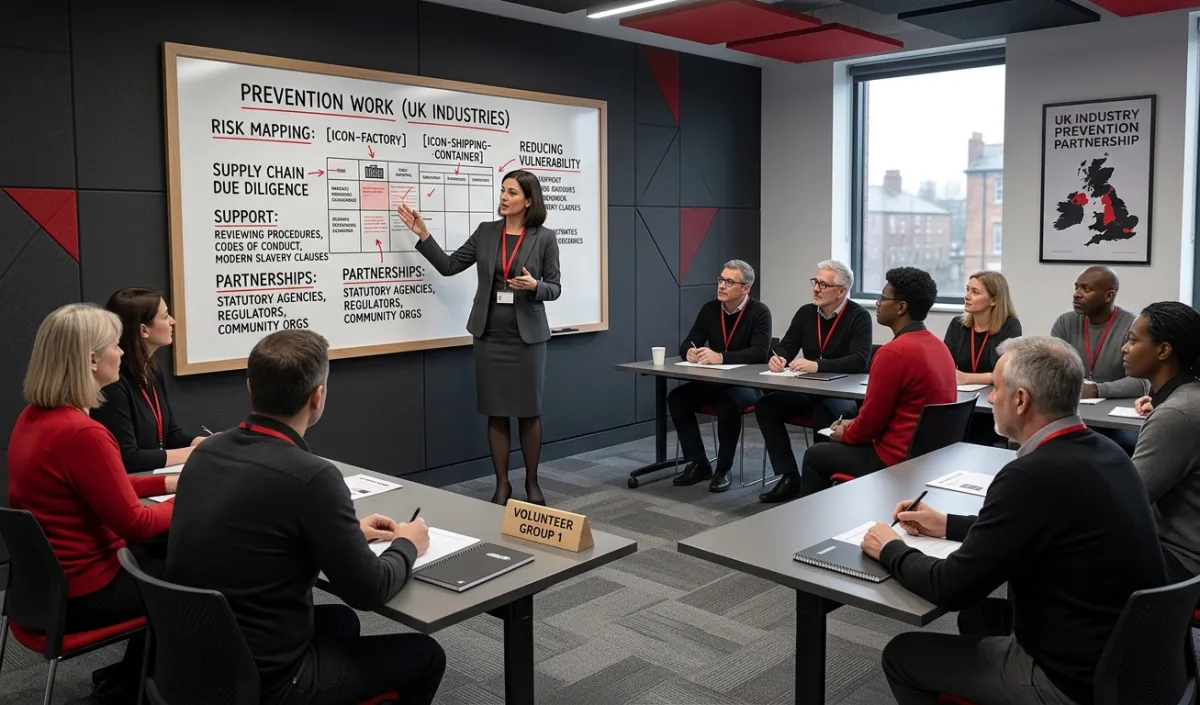
Prevention work focuses on sector-specific risk mapping, policy development and supply-chain due diligence across UK industries. Support includes reviewing procedures, strengthening codes of conduct, embedding modern slavery clauses and building partnership approaches with statutory agencies, regulators and community organisations to reduce vulnerability before exploitation occurs.
Identification
Identification support helps UK organisations and professionals recognise early indicators of trafficking and exploitation, respond safely and avoid causing further harm. Training explores patterns, warning signs and safe conversation approaches in health, education, financial, hospitality and community settings, with a strong focus on consent, confidentiality and psychologically safe practice.
Content is aligned with UK National Referral Mechanism (NRM) pathways, clarifying who can act as First Responders, how informed consent is sought, what information is required for a referral and what typically happens after a referral is submitted. Signposting to specialist services, law enforcement and local safeguarding structures is built into every session, supporting ethical, survivor-centred practice.
Training & Workshops
Training and workshops are designed for UK organisations, professionals and community groups who need practical, evidence-based support to understand trafficking and modern slavery, meet legal and regulatory duties, and embed safe, sustainable responses into everyday practice.
Practical, scenario-based training for frontline staff in health, education, housing, hospitality and community services, focusing on recognising indicators, responding safely, recording concerns and escalating within UK safeguarding and modern slavery procedures.
Sector-Specific Risk Training
Deep-dive sessions tailored to sectors such as finance, technology, hospitality, agriculture and construction, exploring industry-specific trafficking risks, real case examples, regulatory expectations and practical prevention measures for UK organisations.
Leadership & Governance Workshops
Strategic workshops for boards, senior leaders and governance teams on organisational risk, legal duties, reporting, accountability and culture, supporting robust oversight of trafficking and modern slavery in UK organisations.
Safeguarding & NRM Pathways Training
Focused training on how UK safeguarding frameworks intersect with the National Referral Mechanism (NRM), including roles of First Responders, consent, thresholds, documentation and multi-agency working, with clear signposting to specialist support.
Community & Faith Group Awareness
Accessible awareness sessions for community, grassroots and faith-based groups, building confidence to spot concerns, signpost safely and collaborate with local safeguarding partners and UK support services without encouraging direct intervention.
1. Commercial Sex Industry
The commercial sex industry in the UK includes indoor and online sexual services, escorting, massage venues, and other forms of commercial sexual activity. Within these settings, trafficking for sexual exploitation can be carefully concealed behind apparently consensual arrangements, self-advertised services and online platforms.
How trafficking operates in the commercial sex industry
Online escort platforms – adverts may be created or controlled by a third party, with individuals moved between cities or booked for “tours”. Contact details, photos and pricing are often centrally managed by controllers rather than by the person providing the service.
Grooming and the “boyfriend model” – traffickers may present as romantic partners, offering accommodation, gifts or emotional support before gradually introducing commercial sex, exerting control over earnings, and isolating the person from friends and support networks.
Debt bondage – travel costs, accommodation, “advertising fees” and other expenses are recorded as a constantly increasing debt, used to justify ongoing exploitation. Debts are rarely transparent and may be manipulated so they can never realistically be repaid.
Common warning signs for staff and professionals
Scenario (anonymised): A hotel in a UK city noticed that the same individual was repeatedly checking in different young women for short stays, using similar email addresses and paying in cash. Staff observed that one woman seemed withdrawn, did not speak much English, and appeared to wait for the man’s permission before answering questions.
A trained member of staff, aware of local patterns of sexual exploitation linked to online escort adverts, documented their observations using the hotel’s safeguarding log. They shared concerns with the designated safeguarding lead, who consulted local guidance and liaised with the police’s modern slavery team. In later contact with specialist services, one of the women disclosed that she had been moved between several UK cities, with all bookings arranged online by a controller who kept her passport and most of her earnings.
With her consent, an authorised first responder organisation supported a National Referral Mechanism (NRM) referral so that she could be formally recognised as a potential victim of trafficking. This gave access to specialist support, safe accommodation and legal advice. The organisation’s role in this process was early recognition, accurate recording, and signposting to appropriate statutory and specialist partners, not direct intervention at the scene.
2. Banking, Finance & Insurance
Financial institutions are strategically placed to identify patterns linked to human trafficking and modern slavery. UK regulatory frameworks, including anti-money laundering (AML) and counter-terrorist financing (CTF) obligations, increasingly emphasise exploitation-related red flags as part of financial crime risk assessment.
Financial red flags linked to trafficking and exploitation
Unusual transaction patterns – frequent low-value transactions to the same recipients, rapid in-and-out transfers with no clear business purpose, or regular cash deposits inconsistent with stated income or occupation.
Multiple accounts controlled by one individual – several personal or business accounts linked to the same address, phone number or device, used on behalf of different individuals who rarely appear in-branch.
Cash-heavy operations – businesses in sectors known to be at risk (e.g. hand car washes, nail bars, small-scale hospitality) with unusually high cash turnover compared with local peers, or large cash deposits shortly after pay days for low-wage sectors.
Accounts receiving salary payments from a wide range of employers but quickly transferring funds to a limited number of beneficiaries, sometimes overseas.
Insurance products or claims that do not align with the scale, staffing levels or declared activities of the insured business.

Our training supports compliance, risk and frontline staff to integrate modern slavery indicators into existing Know Your Customer (KYC), ongoing monitoring and suspicious activity reporting processes, while maintaining proportionality and data protection obligations.
Role of compliance and AML frameworks
Incorporating modern slavery typologies into internal red flag libraries and transaction monitoring rules.
Ensuring AML, fraud and financial crime teams are aware of sector-specific exploitation risks and typical payment flows.
Developing escalation routes from frontline observations to specialist financial crime teams, who then consider appropriate reporting to the National Crime Agency (NCA).
Collaborating, where appropriate, with law enforcement and authorised first responder organisations to support intelligence-led identification of potential victims.
Clarifying how financial institutions may share relevant information while complying with data protection and regulatory requirements.
Case example: Payroll account used to control multiple workers’ wages
Scenario (anonymised): A UK bank identified that wages from several food processing companies and a logistics firm were being paid into the same personal current account. The account holder’s declared occupation did not align with the number of incoming salary payments. Outgoing transfers were mainly cash withdrawals and small remittances overseas, with no clear spending by the individuals whose wages were being paid in.
Following internal escalation, the financial crime team reviewed the activity, consulted internal guidance on modern slavery indicators and submitted a suspicious activity report (SAR) to the National Crime Agency. In parallel, one employer raised concerns with a local partner agency that some workers were being accompanied to sign contracts and appeared fearful about discussing pay.
Through coordinated action by law enforcement and authorised organisations, several workers were identified as potential victims of labour exploitation. With informed consent, NRM referrals were made so they could access specialist support, advice on their rights in the UK and assistance with safe accommodation and financial support. The role of the bank and employers was to recognise concerning patterns, follow formal escalation routes, and contribute information to statutory processes, rather than intervening directly with suspected exploiters.
3. Technology, AI & Cybersecurity
Digital platforms, AI tools and encrypted communication channels are increasingly used to facilitate recruitment, control and exploitation. Technology and cybersecurity teams play a crucial role in detecting harmful activity, strengthening platform safeguards and supporting lawful investigations, while respecting privacy and free expression obligations.
Online grooming, recruitment and cyber-enabled exploitation
Online grooming and recruitment – contact initiated via messaging apps, gaming platforms or social media, gradually moving to private or encrypted channels. Offers of work, modelling, hospitality or domestic roles may disguise exploitative conditions.
Fake job advertisements – adverts for UK or overseas roles posted on social platforms, small websites or messaging groups, promising high earnings with minimal details on contracts, accommodation or legal status.
Use of encrypted and anonymous platforms – controllers coordinate movement, enforce rules and share images or documents via encrypted messaging, privacy-focused browsers or anonymised accounts.
Cyber scam exploitation – individuals recruited into online fraud or scam operations (for example, cryptocurrency or investment scams), with movement, accommodation and communications controlled by traffickers.
Use of AI-generated images, deepfakes or synthetic identities to recruit, coerce or threaten individuals, including threats to share intimate or manipulated material.
We support technology, trust-and-safety and cybersecurity teams to build policies and tooling that reduce opportunities for exploitation, including reporting pathways for users, internal escalation procedures and cooperation with UK law enforcement and safeguarding partners.
Case example: Fake tech support jobs leading to online scam operations
Scenario (anonymised): A UK-based graduate responded to an online advert for a remote “customer support” role with a technology firm. After initial contact via a mainstream job site, all further communication moved to an encrypted messaging app. The individual was asked to provide scans of their passport and to relocate to shared accommodation arranged by the “employer”.
On arrival, they were instructed to operate online investment and cryptocurrency scam accounts targeting UK consumers. Their movements were restricted, and access to their own devices and identification documents was limited. A technology company, whose brand name was being misused in the adverts, received multiple consumer complaints and escalated the issue to their security and legal teams.
Working with UK law enforcement and an authorised first responder organisation, the misuse of the brand was documented, and information about the recruitment pattern was shared. When the individual later made contact with a UK-based support organisation, staff recognised indicators of trafficking for forced criminality. An NRM referral was completed so that the person could access protection, legal advice and assistance in safely exiting the situation. Our training for technology teams focuses on recognising suspicious patterns, protecting users, and signposting information to appropriate authorities, not on operational disruption by platform staff themselves.
4. Retail, Fashion, Beauty & Entertainment
This cluster includes retail outlets, fashion and garment production, nail and beauty salons, massage services, modelling, nightlife and entertainment venues. Risks range from exploitation in overseas supply chains to coercive conditions in high street premises and informal entertainment settings in the UK.
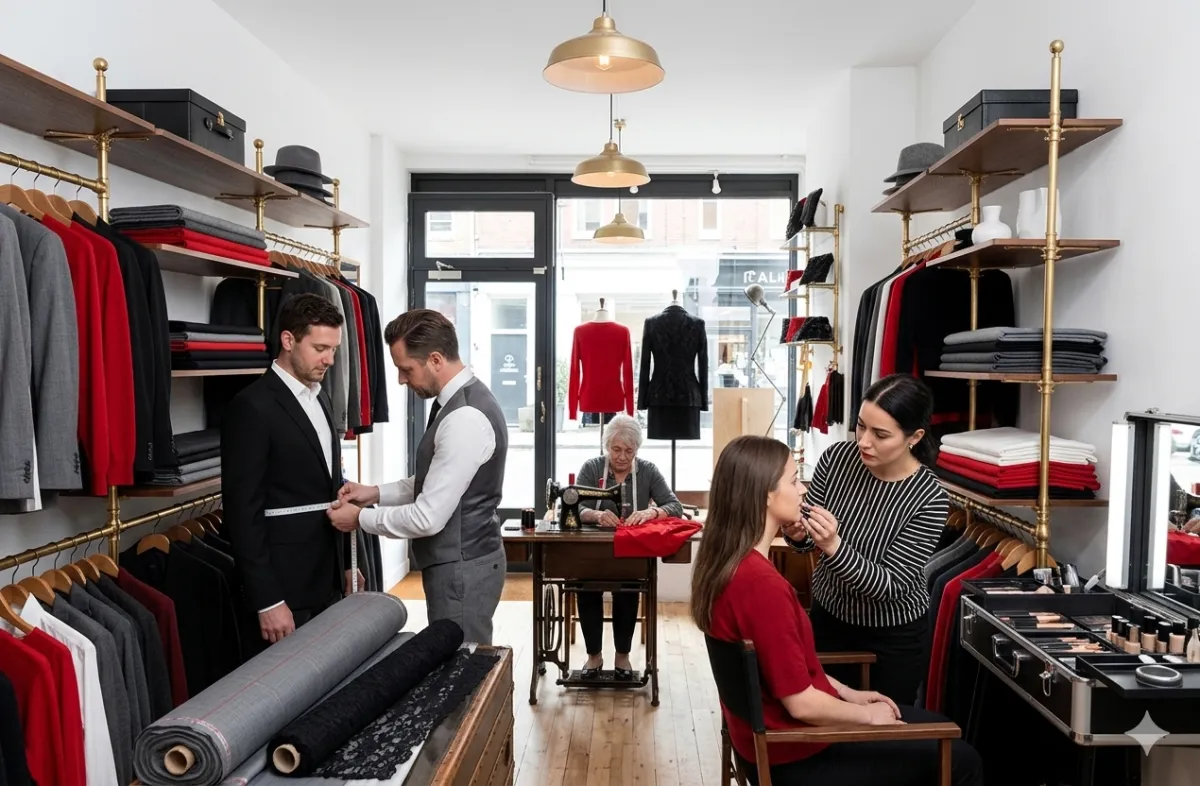
Key risk areas
Supply chain risks – garments, accessories and promotional materials may be produced in environments where workers experience excessive hours, underpayment, unsafe conditions or control by third parties. UK companies have responsibilities under the Modern Slavery Act to consider these risks.
Exploitation in salons and massage services – individuals may live on-site, work extremely long hours for low or no pay, and be dependent on owners for accommodation and immigration advice.
Modelling and entertainment – individuals can be recruited via informal social media adverts or agencies, with limited transparency of contracts, fees or travel arrangements.
Restricted worker conditions – limited breaks, constant supervision, being driven to and from work by the same person, or being discouraged from speaking to customers in private.
Warning signs for managers and staff
Workers who appear underage or unsure of their age, with no clear explanation of their employment status.
Staff who seem afraid to speak to inspectors, auditors or customers, or who defer all questions to a single individual.
Evidence that several staff members share one bank account, phone number or address controlled by another person.
Indications that workers sleep on premises or are transported in groups at unsocial hours by the same driver.
Case example (anonymised): A local authority officer visiting a row of small beauty salons noticed that several staff members in one salon appeared extremely tired, were reluctant to engage in conversation and looked towards the owner before answering. The officer also observed bedding material in a back room. Using the council’s procedures, they shared their observations with the community safety team, who liaised with a regional modern slavery partnership. Subsequent engagement by specialist workers led to disclosures of debt bondage and restricted movement. With consent, NRM referrals were made so that affected individuals could access support. The key role of the initial staff member was to observe, record and refer, not to challenge the business directly.
5. Hospitality, Travel & Tourism
This category covers hotels, motels, short-term lets, tourism businesses, events, carnivals and seasonal attractions. These environments see high visitor turnover and diverse workforces, creating opportunities for both labour and sexual exploitation to be hidden within routine operations.
Risk patterns and warning signs

Use of hotels for exploitation – repeated short stays booked by the same individual for different guests, high numbers of visitors to a single room, or signs of commercial sexual activity linked to online adverts.
High turnover environments – frequent changes in cleaning, catering or security staff supplied via agencies or subcontractors, with limited oversight of recruitment and working conditions.
Staff visibility into suspicious behaviour – housekeeping, reception and night staff may notice unusual patterns (e.g. frequent requests for fresh bedding, refusal of cleaning services, or guests who seem distressed or controlled).
Workers living in employer-provided accommodation with restricted freedom to come and go, or having travel documents held by managers or supervisors.
Case example (anonymised): Night staff at a UK budget hotel noticed that a group of workers staying long-term were collected each morning by the same minibus, appeared exhausted and were reluctant to engage in conversation. The room booker insisted on paying for all rooms in cash and held all key cards. Staff used the company’s escalation procedure to report concerns to head office, which in turn contacted the local modern slavery partnership. Following multi-agency visits, several potential victims of labour exploitation were identified. With support from an authorised first responder, NRM referrals were made, enabling access to specialist support. The hotel’s role was to document what they observed and follow agreed reporting routes, not to intervene with the group directly.
6. Agriculture, Fishing & Forestry
Agricultural work, horticulture, food growing, fishing and forestry often rely on seasonal and migrant labour. Work frequently takes place in remote or dispersed locations, making oversight more challenging and increasing the risk of debt bondage, excessive hours and unsafe living conditions going unnoticed.
Common features and warning signs
Migrant worker exploitation – workers recruited from overseas may arrive with limited understanding of their rights, high expectations of earnings, and dependence on recruiters for accommodation and transport.
Remote work environments – limited access to public transport, advice agencies or alternative employment increases vulnerability and can make it harder for concerns to reach external services.
Debt bondage – recruitment fees, travel costs and accommodation charges may be deducted from wages, leaving workers with little or no income, sometimes recorded as informal “debts” owed to gangmasters or supervisors.
Living conditions that are overcrowded, unsafe or tied directly to employment, with threats of eviction if workers complain or attempt to leave.
Case example (anonymised): A GP practice in a rural area noticed that several patients from the same country were registered at an address linked to farm accommodation. They attended appointments accompanied by the same individual, who frequently answered questions for them. One patient disclosed working extremely long hours with deductions from pay for accommodation and transport that they did not fully understand.
Following clinical safeguarding procedures, the practice safeguarding lead contacted the local authority and a regional modern slavery partnership. With specialist input, the situation was assessed as indicating potential trafficking for labour exploitation. With informed consent from the worker, an NRM referral was made, enabling access to advice, temporary financial support and safe accommodation options. Our training for rural employers and professionals emphasises early recognition, confidential conversations and appropriate referral, rather than direct confrontation with suspected exploiters.
7. Construction, Manufacturing & Logistics
This cluster includes construction sites, manufacturing plants, warehousing, transport, food processing and waste management. These sectors often involve complex subcontracting chains and large, transient workforces, which can obscure who is responsible for employment conditions and oversight.
Risk factors and warning indicators
Large labour forces with low oversight – workforces supplied through multiple agencies or labour providers, with unclear lines of responsibility for checks, contracts and welfare.
Withheld wages and documents – workers reporting that they have not received payslips, do not understand deductions, or that identity documents or bank cards are held by supervisors or gangmasters.
Groups of workers being transported together at early or late hours, apparently under the direction of a single individual who also controls accommodation.
Reluctance of workers to speak without a supervisor present, or fear about losing both work and housing if they raise concerns.
Case example (anonymised): A UK food manufacturer noticed that several workers arrived and left in the same unmarked minibus, were paid via one labour provider, and appeared unsure of how much they were earning. A health and safety representative overheard workers discussing deductions for “transport and housing” that left them with very little money. The representative reported this through the company’s whistleblowing channel.
The company’s ethical trade team engaged with the labour provider and sought advice from a specialist NGO and the Gangmasters and Labour Abuse Authority (GLAA). Indicators of potential trafficking for labour exploitation were identified. With support from an authorised first responder, affected workers were offered information about their rights and the option of an NRM referral. Our training for these sectors focuses on building clear reporting routes, strengthening due diligence, and ensuring that concerns reach the right statutory partners in a timely and safe way.
8. Domestic, Care & Community Services
This cluster includes domestic work, live-in childcare, elder care, cleaning and janitorial services, gardening and landscaping, and organised street begging. Work is often informal, taking place in private homes or public spaces where oversight by regulators or employers is limited, increasing the risk of isolation and control.
Patterns of exploitation and warning signs
Isolation and control – domestic or care workers may rarely leave the property alone, have limited access to phones or the internet, and be discouraged from speaking to neighbours, delivery drivers or visiting professionals.
Informal work arrangements – no written contract, vague arrangements regarding pay, or “pocket money” instead of regular wages. Workers may not know which organisation, if any, is officially employing them.
Street-based activity (such as organised begging or selling) where individuals appear to hand over money to a controller, travel in groups and show signs of poor accommodation or hygiene.
Workers showing signs of exhaustion, fear or confusion about their rights, particularly when asked about time off, pay or access to medical care.
Case example (anonymised): A community nurse visiting an older adult at home noticed that a live-in carer, who had recently arrived in the UK, seemed anxious, had no personal room of their own and was unsure of their working hours and pay. The carer reported sending most of their pay to an individual overseas who had arranged their travel and job, but they did not fully understand the deductions being made.
Following safeguarding procedures, the nurse discussed their concerns with the health provider’s safeguarding lead, who liaised with the local authority. A specialist organisation was asked to meet the carer separately and provide information about rights and support. Indicators of potential trafficking for labour exploitation in a domestic setting were identified. With the carer’s agreement, an NRM referral was made so they could access independent advice, safe housing options and financial assistance while their situation was assessed. Our role in this type of scenario is to equip professionals with the skills to notice concerns, respond safely and connect individuals to official support pathways.
Safe Pathways Out Of Human
Trafficking
UK-based, survivor-centred training on modern slavery and human trafficking
Supporting organisations, professionals and communities across the UK to recognise, respond to and prevent human trafficking, with survivor-centred, trauma-informed practice.
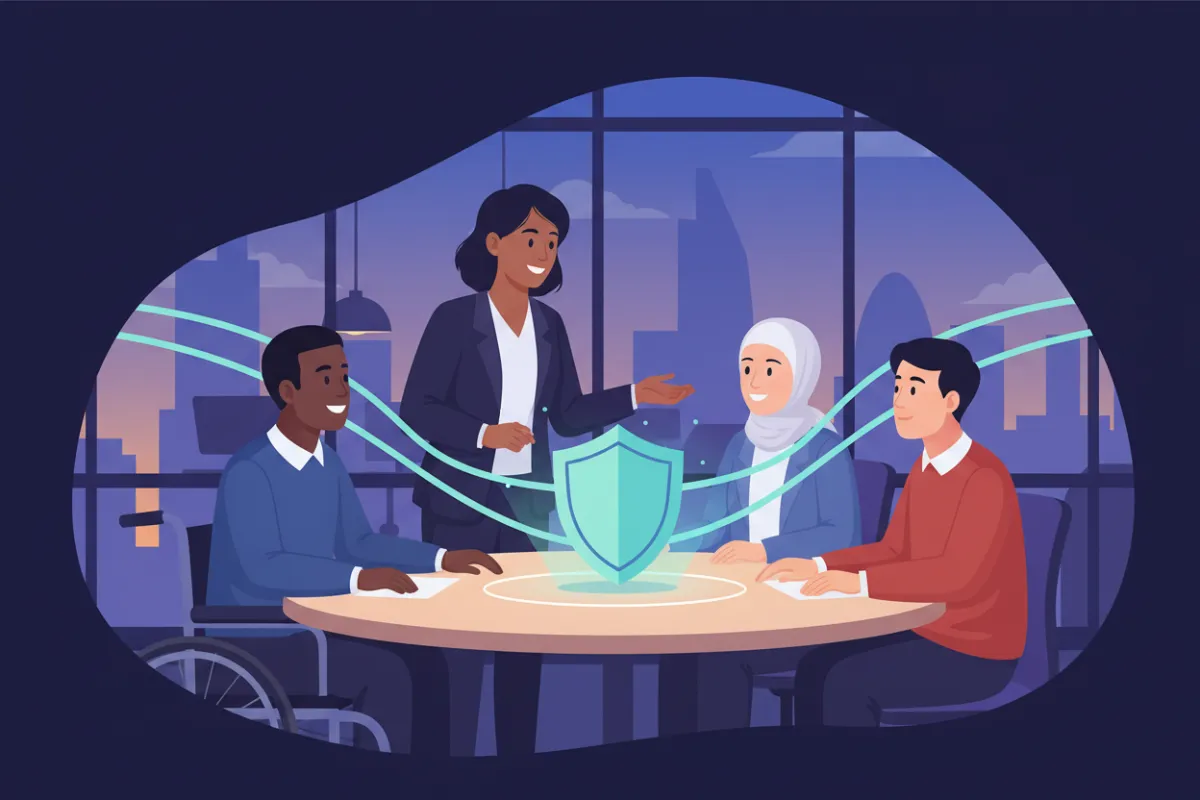
Contact Rahabs Daughters CIC
Email: [email protected]
Address: Scotland, UK (full details to be confirmed)


Building Safe Pathways: Awareness, Not Vigilantism
Human trafficking and modern slavery can be present in everyday environments—hotels, farms, factories, beauty salons, private homes and online spaces. Many situations will not be immediately obvious, and staff are not expected to make legal determinations. However, consistent awareness and early identification significantly increase the chances that people experiencing exploitation can be linked with appropriate support.
Our Community Interest Company’s role is training, awareness and early identification. We help organisations across UK industries embed clear procedures so that staff can recognise concerning patterns, document what they see and use agreed internal and external reporting routes. We do not carry out operational enforcement or emergency response activities.
No individual is expected to intervene directly with suspected traffickers or exploiters. Personal safety and organisational procedures come first.
Staff should focus on noticing indicators, recording accurate information and following internal safeguarding, whistleblowing or compliance processes.
Where modern slavery or trafficking is suspected, concerns can be shared with appropriate UK channels, which may include the police, local authority safeguarding teams, specialist NGOs and, for eligible cases, the National Referral Mechanism (NRM) through authorised first responders.
Ongoing training helps ensure that responses remain aligned with current UK legislation, guidance and local partnership arrangements.
By investing in sector-specific training, UK organisations can strengthen their ability to prevent exploitation in their operations and supply chains, support early identification of potential victims, and ensure that any concerns are channelled through safe, lawful and trauma-informed pathways. Awareness is not about dramatic action; it is about steady, informed practice that enables the right agencies to act and helps people access the support they are entitled to.
WHAT IS HUMAN TRAFFICKING?
SURVIVOR STORIES
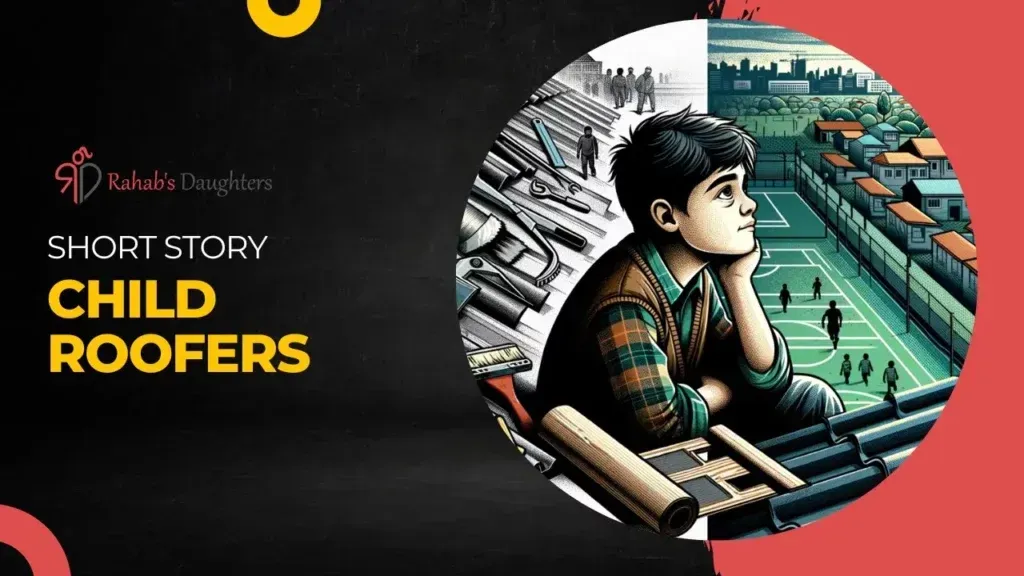

Sex and labor trafficking are in your community.
It’s in your power
to stop it.
Traffickers steal a person’s past and present. Together, we can create a better future.
Human traffickers deny control over their victims lives and strip people of their dignity. It impacts 25 million people across the world. Anyone can be trapped by traffickers, however the vulnerable are most at risk.
Rahab’s Daughters is committed to education, outreach, and action. Through your generosity we provide vocational training options, safe houses and prevention and counseling. Thanks to your help
we are able to conduct rescue operations and help communities understand that modern day slavery is not just in dark corners of
the world- it’s next door. It could be in your family.
Person by person, community by community, we can help communities regain control and survivors regain independence. Working together, we can help them take back their life.
Sex and labor trafficking are in your community.
It’s in your power
to stop it.
Traffickers steal a person’s past and present. Together, we can create a better future.
Human traffickers deny control over their victims lives and strip people of their dignity. It impacts 25 million people across the world. Anyone can be trapped by traffickers, however the vulnerable are most at risk.
Rahab’s Daughters is committed to education, outreach, and action. Through your generosity we provide vocational training options, safe houses and prevention and counseling. Thanks to your help
we are able to conduct rescue operations and help communities understand that modern day slavery is not just in dark corners of
the world- it’s next door. It could be in your family.
Person by person, community by community, we can help communities regain control and survivors regain independence. Working together, we can help them take back their life.
How We Work Together To Change Lives
Prevention & Education
Stopping human trafficking starts with understanding its scope, how it works, and what you can do to stop it.
Our work includes:
Teaching people how to recognize the signs of trafficking
Understanding the different kinds of slavery
Prevention and empowerment techniques, including self-defense
Events
Awareness turns into action.Action turns into power.
Rehabilitation
Getting out is just the first step. We provide the means to create a safe reintegration into the world so people can decide on their own lives.
This includes:
Education and vocational training
Creation of a dream plan
Mentoring
Education can’t be taken away. Empowerment is forever.
Discover Ways You Can Get Involved

See how your generous donations can save lives around the world.

Working behind the scenes to support everyone out front.

Build trust and take action to help people step out & stay out of slavery’s grip.
Help survivors create dream plans to take back the rest of their lives.

Become a champion for education and action in your community.
Discover Ways You Can Get Involved
See how your generous donations can save lives around the world.
Working behind the scenes to support everyone out front.
Build trust and take action to help people step out & stay out of slavery’s grip.
Help survivors create dream plans to take back the rest of their lives.
Become a champion for education and action in your community.